You can pick the right detergent, dose your laundry perfume to perfection and still pull a load out of the airer that smells of almost nothing. The culprit, almost always, is the drying step. How you dry your washing has more effect on the scent you keep than people realise — often more than which fragrance you used in the first place.
So we sat down and ranked the five most common ways British households actually dry laundry, honestly, on the things that matter: how much scent survives, how kind it is to your fabrics, what it does to your home, what it costs to run, and how long it takes. No hot takes, no purity tests. Just an honest league table.
Drying indoors most of the time? Here's what we'd use.
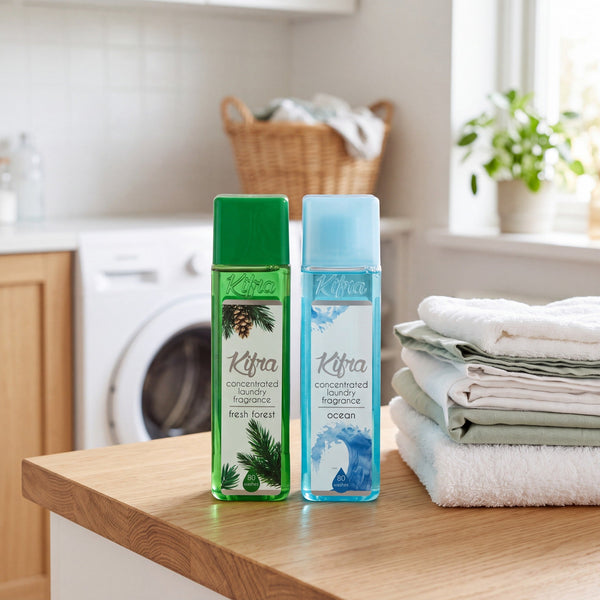
- Kifra Ocean — cool marine notes, like sea air on warm linen. A clean, light scent that suits airer-dried everyday washing.
- Kifra Fresh Caps — clean cotton and sun-dried sheets, for the weeks the washing line isn't an option.
- Want both? The Fresh Trio Bundle pairs Ocean and Fresh Caps with Spring — 3 × 200ml for £29.99, about 12.5p a wash.
Dose 2.5ml into the softener compartment alongside your usual detergent. Each 200ml bottle does around 80 washes.
Why drying makes such a difference
Laundry perfume — Kifra, Lenor, the fragrance in your detergent, all of it — works because fragrance oils are absorbed into damp fibres on the final rinse and slowly released as the fabric dries. The trouble is that fragrance molecules are volatile, which is the scientific way of saying they evaporate fast, and they evaporate faster the warmer things get. Heat strips scent. Time, airflow and lower temperatures hold it in.
That’s the whole game in one sentence: the slower and cooler your laundry dries, the more scent stays in it. Everything below is a variation on that theme.
The honest ranking
1. Line dry outside — scent retention: excellent
The undefeated champion for fragrance. Outdoor air is moving, the temperatures are moderate, and the slow evaporation lets fragrance settle into the fibres rather than rushing out of them. Bedlinen line-dried in spring smells noticeably stronger than bedlinen tumble-dried, and most people can tell the difference blindfolded.
The trade-offs, honestly. British weather is the obvious one — pollen days, sudden rain, washing brought in damper than it went out. Strong direct sun can fade dark colours over time, so turn coloured cottons inside out. And in pollen season, line-drying outside can deposit allergens on bedlinen, which is worth knowing if anyone in the household has hay fever.
Best for: towels, sheets, bedlinen, jeans, anything cotton or linen on a dry breezy day.
2. Indoor airer in a well-ventilated room — scent retention: very good
The unsung hero of British laundry. A clothes horse in a cool, well-ventilated room — door open, window cracked — retains nearly as much scent as line-drying outside, and it works year-round.
The trade-offs, honestly. Drying clothes indoors releases a surprising amount of moisture into the room — multiple litres from a single load — which means a small, closed bedroom is a recipe for damp walls and mould over time. The fix is straightforward: dry in the room with the best airflow you have, crack a window even in winter, and don’t leave wet washing overnight in a sealed space.
Best for: everyday laundry through autumn and winter, delicates, anything you’d rather not put near direct heat.
3. Heated airer (tented, low-power) — scent retention: good
A heated airer with a cover sits at the sweet spot of speed and scent. The gentle warmth speeds drying without the high heat that strips fragrance, and tenting it traps moist air around the clothes for a few hours of efficient drying. The running cost is famously low — pennies per load — which is why they sold so well during the energy-price years.
The trade-offs, honestly. It’s still humidity in your home, so the same ventilation rule applies. The tent isn’t quite as scent-friendly as cold airer drying, because the warmth does cost you a bit of fragrance. And you do need to lay things out properly — overcrowded heated airers dry unevenly and can leave the inside layers slightly damp.
Best for: winter weeks when line drying is impossible, working-from-home households who want a reliable next-day turnaround.
4. Radiator — scent retention: poor (and we’d rather you didn’t)
We need to be straight with you about this one. Draping wet washing directly on a radiator is the most common drying mistake in British homes, and it loses out on almost every measure. The direct, concentrated heat strips fragrance quickly — the very thing you paid for. The clothes block the radiator’s output, so the room takes longer to heat and your energy bill goes up. And all that moisture has to go somewhere; the typical destination is the walls and window-frames around the radiator, which is how condensation, black mould and ruined paintwork start.
If you absolutely have to use the radiator, please use a radiator airer that sits across the top rather than touching the radiator directly, dry one or two items at a time, and keep the room ventilated. But we’d genuinely steer you toward an indoor airer in the next room instead — it’s better for the clothes, the scent, the house and the bill.
The trade-offs, honestly. It’s faster than a cold airer, and that’s the only thing it has going for it. The hit on scent, fabric and home humidity is hard to defend.
Best for: small, urgent items — a school shirt for tomorrow — used with a proper rail and a cracked window. Not a routine.
5. Tumble dryer — scent retention: worst
This is the one most likely to start an argument, so we’ll be careful with it. A tumble dryer is fast, predictable, weather-proof and genuinely useful — particularly for towels and bedlinen, which come out softer than line-dried. But on the specific question of scent retention, it’s the worst of the five. The high heat and rapid airflow are designed to evaporate moisture quickly, and they don’t distinguish between water and fragrance oils. A lot of your laundry perfume leaves the building through the vent.
The trade-offs, honestly. Cost is the obvious one — running an electric tumble dryer for an hour-plus costs more than every other option on this list combined. Heat is harder on elastane, fleece, technical fabrics and dark colours than gentle drying. And the scent loss is real, especially on synthetics, which hold less fragrance to begin with.
Best for: towels, bedlinen, casual cottons, time-pressure laundry days — ideally on a lower-heat or sensor setting, with wool dryer balls to cut drying time.
A cheat-sheet for the wall above your washing machine
If you only want to remember one image from this post, this is the one:
| Method | Scent retention | Fabric care | Drying time | Cost to run | Home humidity |
|---|---|---|---|---|---|
| Line dry outside | Excellent | Excellent (turn dark colours inside out) | Slow | Free | None |
| Cold indoor airer | Very good | Excellent | Slow | Free | High — ventilate well |
| Heated airer (tented) | Good | Very good | Moderate | Very low | Moderate |
| Radiator | Poor | Mixed | Fast | Hidden cost in heating | High — risks mould |
| Tumble dryer | Worst | Mixed (heat is hard on synthetics) | Fast | Highest | Vented out |
The 80 / 20 trick most people don’t use
You don’t have to pick one method per wash, and the best laundry routines combine two of them. The single most useful trick for keeping scent without giving up on convenience is the 80 / 20 finish: dry the load 80% of the way on a line or cold airer, then finish the last 20% in the tumble dryer on the lowest heat — or even the air-only setting — for fifteen minutes. You get the soft, fluffy feel that tumble drying gives towels, you keep most of the fragrance the slow drying laid down, and you avoid the worst of the energy bill.
The reverse trick works too: if you’ve over-dried in the tumble and your bedlinen smells faint, hang it on the airer for an hour to “rest” before folding. The fragrance you do still have will redistribute through the fibres as the fabric cools.
Five drying mistakes that kill scent
A few honest culprits, in rough order of damage done.
Leaving wet washing in the drum overnight. Damp clothes sitting against each other develop a musty bacterial note that no laundry perfume can paper over. Run a second short rinse cycle and dry as normal if this happens.
Over-drying. Bone-dry laundry holds less scent than slightly-cool-to-the-touch laundry. Pull things off the airer when they’re just dry, not crispy.
Packing the airer or line too tightly. Touching fabrics don’t dry, they sit damp, and they keep the airflow off each other. A finger’s gap is the rule of thumb.
Drying in a sealed room with no airflow. Damp washing in a closed room means humid air settling into the fabrics overnight rather than evaporating away. Open a door or window.
Going straight into a wardrobe. Folding warm-from-the-tumble laundry into a wardrobe traps heat against the fragrance and accelerates loss. Let everything cool to room temperature first.
The Mediterranean approach
We’ve mentioned this before in our post on what Mediterranean grandmothers know, but it’s worth saying again here: the reason laundry in Spanish and Italian households tends to smell strong for longer is not a different detergent. It’s that almost nothing gets tumble-dried. A balcony, a courtyard, a clothes airer in the cool of an internal hallway — that slow, low-temperature drying is doing most of the work. You can borrow the habit without the balcony.
What we’d actually recommend
If you can, line dry outside whenever the weather lets you, and keep a cold indoor airer ready for the days it won’t. If indoor drying is your norm, a heated airer with a cover is the most efficient compromise. Keep the tumble dryer for towels, time-pressure days and the 80 / 20 finish. And please give the radiator a break.
For more on stopping fade-out between washes, our pillar guide to long-lasting laundry scent covers the rest of the routine, and our Kifra care guide walks through dosing, storage and fabric-by-fabric tips.
Frequently asked questions
Does the tumble dryer really ruin laundry scent?
It doesn’t ruin it, but it noticeably reduces it — the high heat and fast airflow strip volatile fragrance compounds along with the water. You’ll still get some scent on towels and bedlinen, particularly if you use a generous dose and the lower-heat setting. For the most retention, line dry or use a cold airer and only finish in the tumble.
Why do my towels smell less than my bedsheets after the same wash?
Towels are denser, hold more water and usually go through the dryer more often than bedsheets — three things that all lose fragrance. The fix is mostly mechanical: dose properly into the softener compartment, dry more slowly, and run an occasional strip-wash. Our towels-don’t-hold-scent guide covers the full reset.
Is drying clothes indoors really bad for the house?
Not if you ventilate. The problem isn’t drying laundry indoors, it’s drying it in a sealed, unventilated room — that’s where damp walls and mould start. A cracked window, an open door to the rest of the house, or a small extractor will let the moisture out and keep the room dry. A cold indoor airer in a ventilated space is a perfectly safe long-term drying method.
The bottom line
Drying is the half of the laundry routine almost no one optimises, and it’s where most of your fragrance is either kept or lost. Slower and cooler keeps the scent. Fast and hot strips it. If you’re putting the effort into a good detergent and a beautiful laundry perfume, give the drying step the same little bit of attention — your washing will smell lovely for days longer.
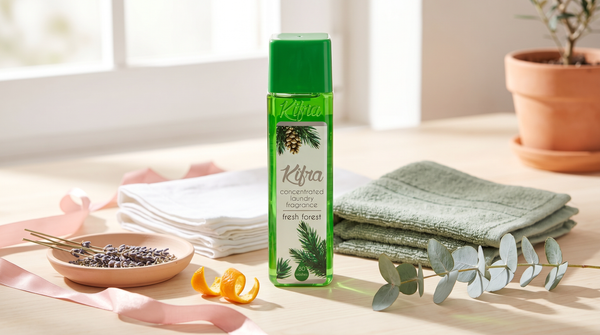
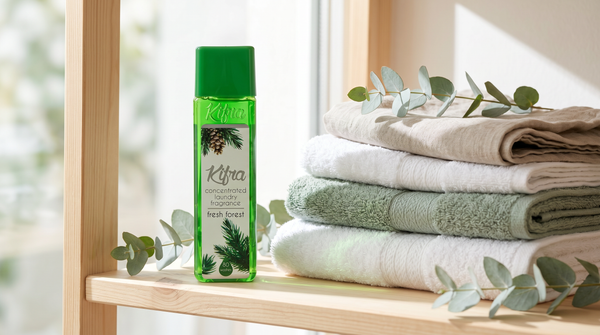
Explore the Kifra range or start with our most-loved Kifra Fresh Forest concentrated laundry perfume.